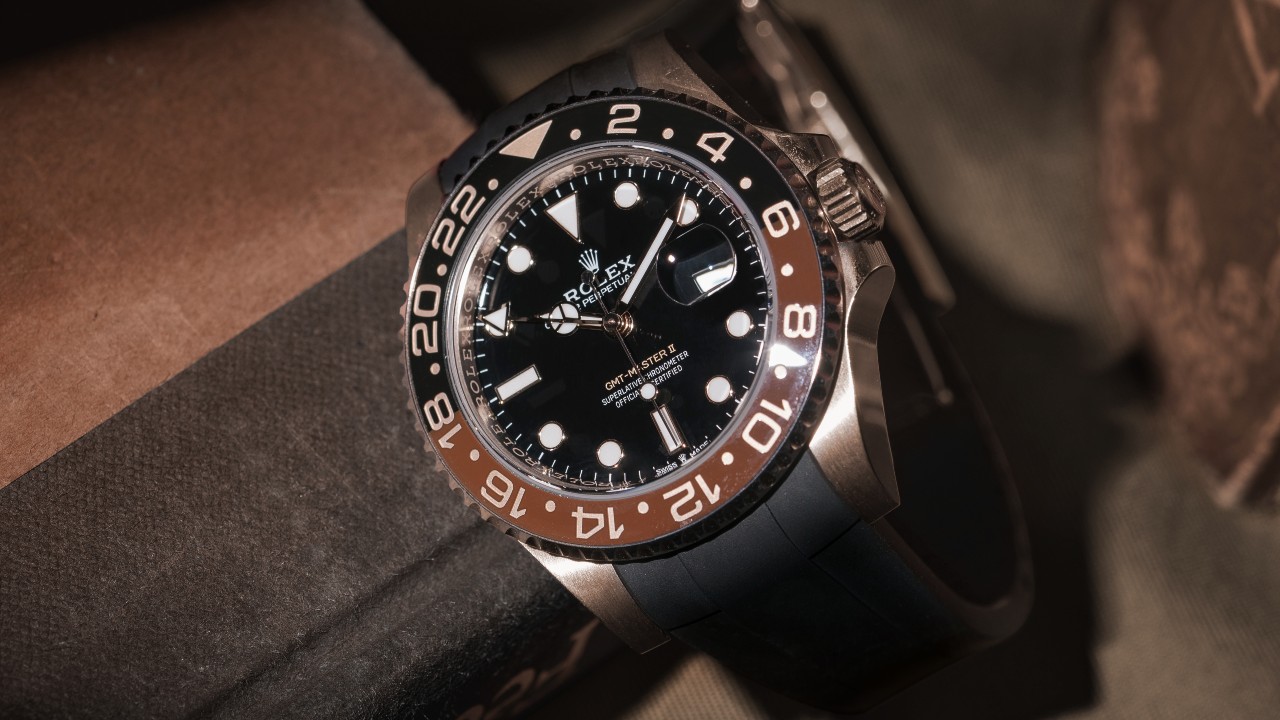


The 50th Anniversary of the Patek Philippe Nautilus and Its Technical Journey Over Five Decades
The year 2026 marks a significant milestone in the history of the Patek Philippe Nautilus. Fifty years after its first introduction in 1976, the Nautilus has not only endured as a collection, but has evolved into one of the key reference points in discussions surrounding modern sports watches. This 50th anniversary is not merely a celebration of age; it is an opportunity to reexamine how Patek Philippe has built, refined, and preserved the technical identity of the Nautilus amid shifting market preferences and unusually intense demand.
The Patek Philippe Nautilus has always occupied a unique position. It was never intended to be the most talked-about watch, nor a singular icon meant to define the brand. Yet the past five decades demonstrate how consistent design language and mechanical architecture ultimately propelled the Nautilus to the center of the horological conversation.
Table of Contents
ToggleNautilus 3700 and a Technically Risky Decision
When the Patek Philippe Nautilus ref. 3700/1A was launched in 1976, the Swiss watch industry was undergoing one of its most unstable periods. The Quartz Crisis forced many manufacturers to take safer paths, while Patek Philippe chose a direction that was both technically and commercially risky: releasing a stainless steel sports watch priced in a way that challenged market perceptions at the time.
From a construction standpoint, the Nautilus 3700 showcased a non-conventional engineering approach. Its case was inspired by a ship’s porthole, using a two-part structure with “ears” on the right and left sides that functioned as a bezel-locking system. This design ensured solid water resistance for a thin mechanical watch by 1970s standards.
Its dimensions, considered large for the era at approximately 42 mm, were even regarded as excessive by some. Yet it was precisely these proportions that later proved the longevity of the Nautilus design across generations.
From Experiment to Modern Standard: Ref. 5711
The most significant shift in the modern history of the Patek Philippe Nautilus occurred in 2006 with the introduction of ref. 5711/1A. This reference did not radically alter the Nautilus DNA, but refined it to better suit long-term production and servicing needs.
The case size was adjusted to around 40 mm, improving ergonomics on the wrist. The case construction transitioned to a three-part system, a practical decision that facilitated maintenance without compromising the core design character. The blue dial with refined horizontal embossing became a visual signature that remains instantly recognizable today.
Mechanically, the 5711 initially used the Caliber 324 SC before being updated to the Caliber 26-330 S C, which introduced hacking seconds and improved winding efficiency. From a technical perspective, this was the most stable and rational Nautilus. Ironically, it was this very version that later became the epicenter of an unprecedented surge in global demand.
When Demand Overtakes Design
Entering the 2010s, the Nautilus ref. 5711 shifted from a luxury sports watch into a market phenomenon. Lengthy waiting lists and soaring secondary-market prices created pressures that no longer aligned with Patek Philippe’s philosophy as a family-owned watchmaker with a long-term orientation.
The decision to discontinue the 5711/1A in 2021 is often viewed as drastic. However, within a technical and portfolio context, it is more accurately understood as an effort to reclaim control over the direction of the collection. Patek Philippe has stated openly that it does not want the brand to be reduced to a “one-watch brand.”
As a structural successor, Patek introduced the Nautilus ref. 5811/1G in white gold. Notably, this reference returned to the original construction philosophy of the Nautilus 3700 with a monobloc-style case, albeit presented in more modern proportions. From a technical standpoint, the 5811 can be considered more purist than the 5711, though its use of precious metal clearly limits its position within the broader collection hierarchy.
The 50th Anniversary and the Question of Movement
As the Nautilus reaches its 50th year, discussions surrounding the Patek Philippe Nautilus no longer stop at the case or material. Attention has shifted toward the movement. To date, the Nautilus line continues to rely on the Caliber 26-330 S C, with a power reserve of approximately 45 hours.
In the context of a five-decade celebration, expectations for a new movement arise naturally. Not merely a revision, but a new architecture capable of maintaining the Nautilus’s slim profile while offering efficiency and power reserve more aligned with contemporary standards. A micro-rotor automatic caliber is often cited as an ideal solution, although such development is clearly not a short-term decision for Patek Philippe.
The Nautilus’s 50th anniversary also clarifies the collection’s position within the broader Patek Philippe ecosystem. The absence of a steel three-hand Nautilus in the current regular lineup is not coincidental, but rather a signal that Patek seeks to maintain balance between sports watches, dress watches, and high-complication lines.
In this context, the Nautilus does not stand alone. It exists alongside the Calatrava as the classical standard, high complications such as perpetual calendars as the technical pinnacle, and newer lines like the Cubitus, which absorb elements of the Nautilus design language without repeating the same role.
After five decades, the value of the Patek Philippe Nautilus does not lie in any single reference, but in the disciplined consistency of its design and engineering approach. Every change—whether enthusiastically embraced by the market or sparking debate—has been rooted in long-term considerations rather than immediate responses to trends.
The 50th anniversary of the Nautilus should be read as a moment of technical reflection: how a sports watch can evolve without losing its design direction, while remaining relevant amid continuously rising demand.